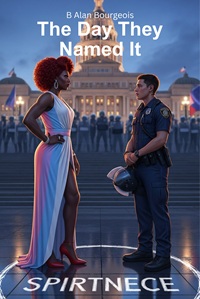
When a new law threatens to erase queer and trans lives from public space, eighth-grade civics teacher Marcus Ibarra does the most dangerous thing he can imagine—he shows up to the protest in full drag.
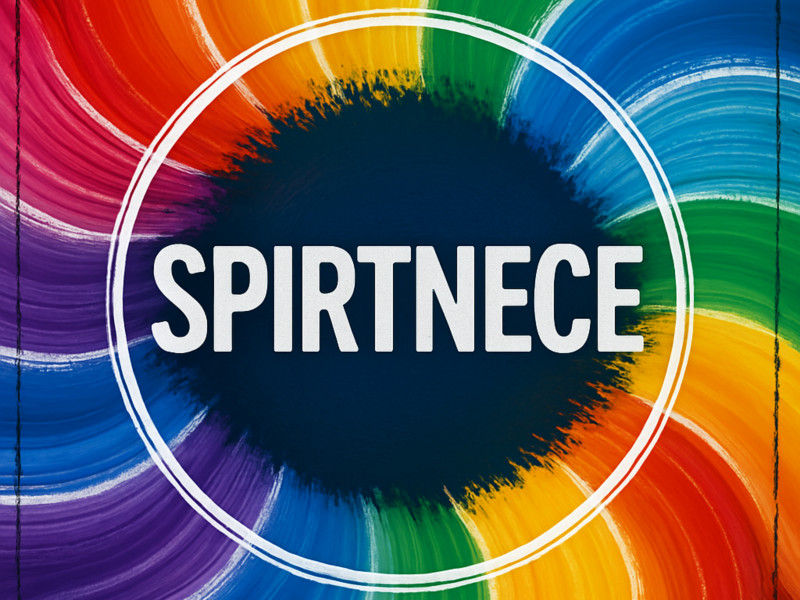
As Marsha La Rivera, paying homage to Marsha P. Johnson and Sylvia Rivera, he expects chants, speeches, maybe arrests. He doesn’t expect a chalk circle on the capitol steps with a strange word written inside it:
SPIRTNECE.
When Marsha steps into that circle and calls out a young cop named Liam Jensen, the moment goes viral. In front of riot police and a furious crowd, they improvise a fragile truce: inside the circle, no one swings, no one dehumanizes, and everyone has to say out loud what they’re really afraid of.
The circle dissolves in the rain. The video doesn’t.
Overnight, spirtnece—the lived alignment between what you believe and what you do—starts turning up in classrooms, churches, city councils, and protest group chats. Some people embrace it, some mock it, some try to hijack it. Marcus just wants to keep his job, protect his students, and hold on to the integrity that dragged him into that circle in the first place.
The Day They Named It is a sharp, hopeful, and unapologetically queer political novella about courage, language, and the thin line between fear and humanity. If you’ve ever wondered whether one defiant moment can change anything, this story is your answer—and your challenge.
REVIEW:
“The Day They Named It” imagines how a single protest moment can give language to a movement. Marcus Ibarra, a Black civics teacher by day and drag queen Marsha La Rivera by night, joins a capitol protest against an anti-queer bill in full drag and steps into a mysterious chalk circle labeled “SPIRTNECE.” In the tense standoff with riot police, Marsha reframes the confrontation as a “spirtnece circle,” a space where spirit and action must match, drawing in a young officer, a trans organizer, a fierce mother, and a conflicted pastor to speak their fears and responsibilities aloud. The resulting viral clip sends the word “spirtnece” rippling through classrooms, churches, hospitals, and activist spaces as shorthand for moral alignment. Direct, accessible prose, a vivid central set-piece, and a hopeful but unsentimental tone make this a compelling fable about queer resistance, language, and the hard work of living up to one’s own values in public.
- True Voice Review
Click to purchase eBook or Print
1,000-piece Puzzle available for: $44.95 - Click here to order